pvtend: PV Tendency Decomposition
v|release| · Source on GitHub · README
PV tendency decomposition for atmospheric blocking, propagating anticyclones, and all synoptic-scale cyclonic event lifecycle analysis.
pvtend diagnoses the growth, propagation, and decay of mid-latitude weather
events by decomposing potential vorticity (PV) tendencies from ERA5
pressure-level data onto physically meaningful components using an orthogonal
basis framework. This is the Part I work of Yan et al. (in prep.) about
blocking lifecycle analyses on onset, peak, decay stages.
Gallery
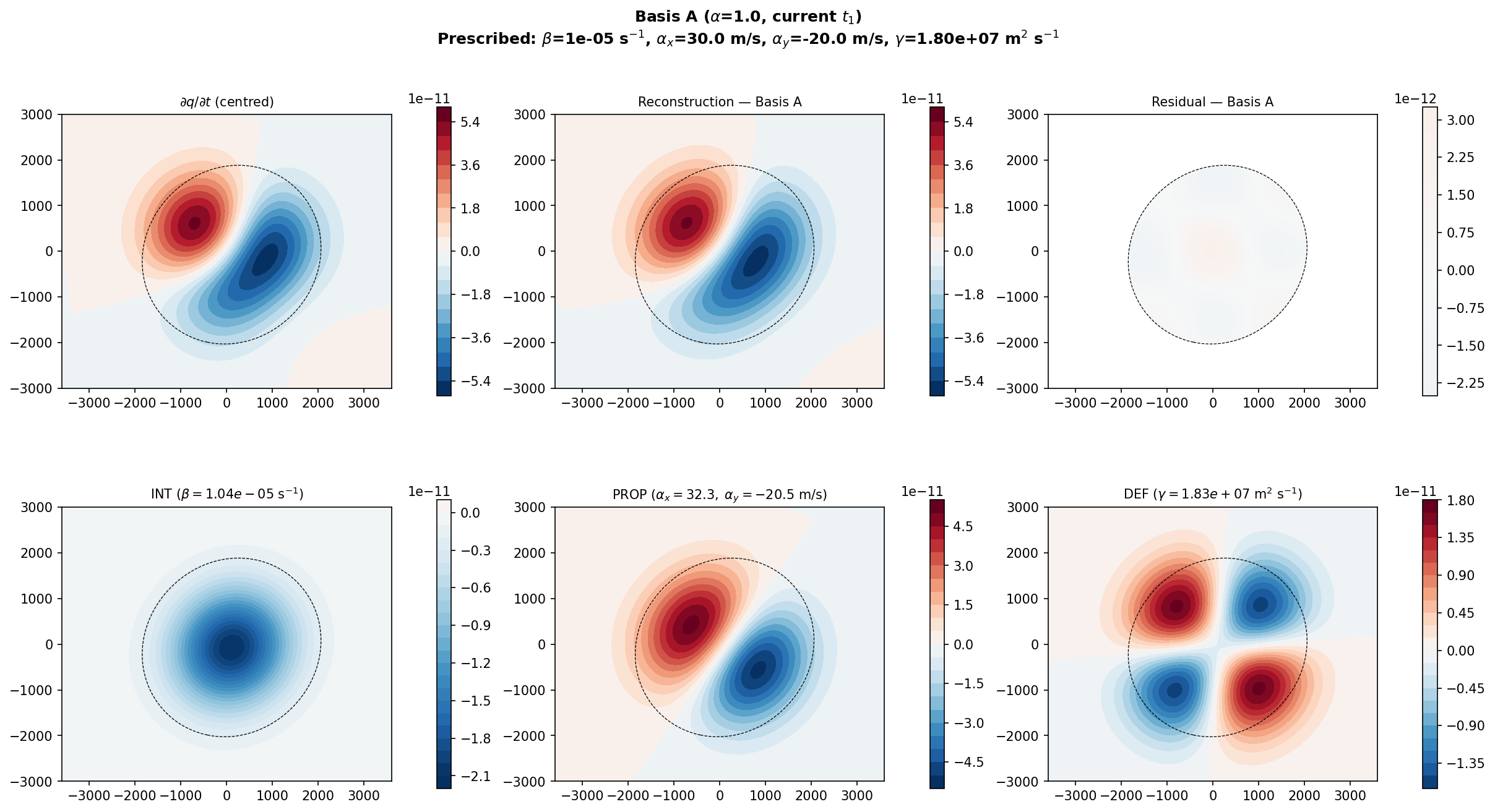
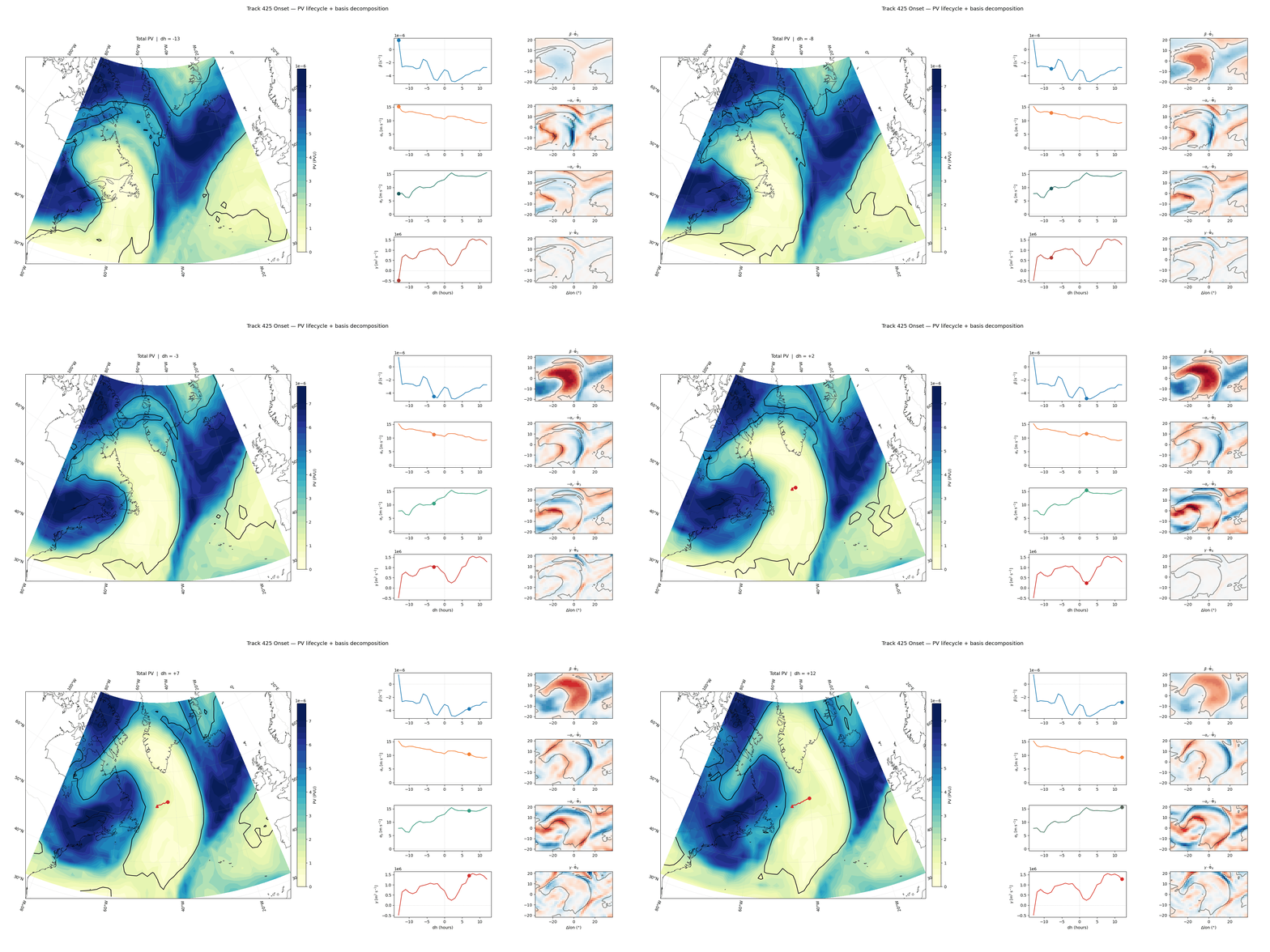
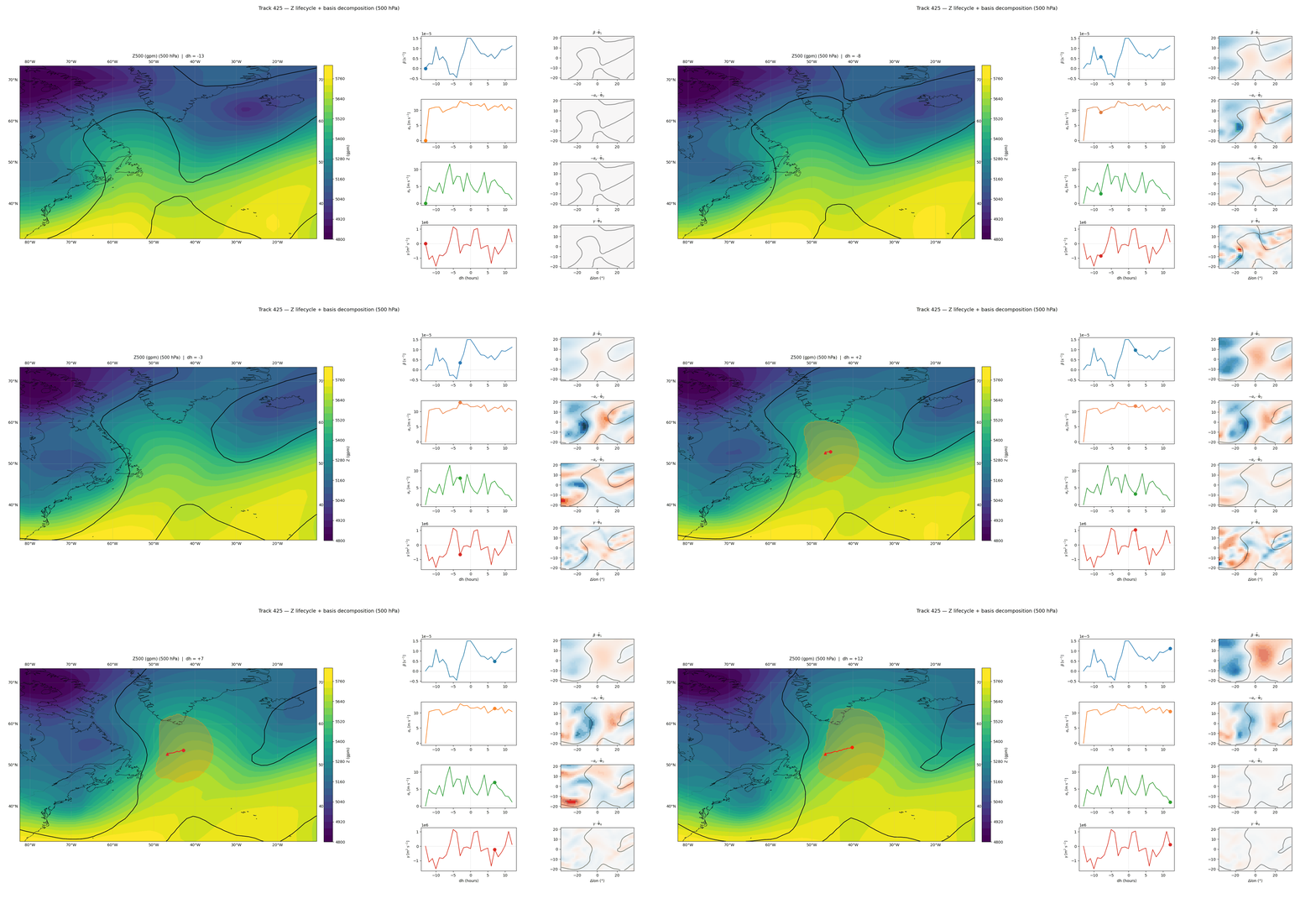
03z_four_basis_projection_geopotential.
Event catalogues
Blocking and PRP-high events are identified as persistent anticyclonic anomalies in 500 hPa geopotential height using TempestExtremes v2.1 to track contiguous Z500 anomaly features that exceed a fixed threshold for ≥5 days, producing CSV catalogues with columns for event ID, centre lat/lon, onset/peak/decay timestamps, and area.
Sample catalogue (ERA5, 1990–2020 blocking):
ERA5_TempestExtremes_z500_anticyclone_blocking.csv
(view on GitHub)
Features
PV tendency computation — zonal advection, baroclinic counter propagation, vertical advection, and approximated diabatic heating terms.
QG omega solver — Hoskins Q-vector formulation with FFT+Thomas (default) and 3-D direct/iterative (BiCGSTAB+ILU) backends.
Helmholtz decomposition — spherical-harmonic backend (default, via
pyspharm) plus a legacy spherical-FFT solver, with a parity-mirror trick that lifts NH-only fields onto the global sphere for a near-zero harmonic residual.Moist/dry omega splitting — decomposes vertical motion into moist and dry contributions.
Isentropic diagnostics — PV-tendency analysis on isentropic surfaces.
Orthogonal basis decomposition — projects PV tendency onto intensification (β), propagation (αx, αy), and deformation (γ) modes.
Composite explorer —
plot_varfor bootstrap-significant spatial maps with shared colorbars;plot_baroclinic_tiltfor two-level v′ overlay.RWB detection — anticyclonic/cyclonic Rossby wave breaking classification.
Composite lifecycle — multi-stage ensemble averaging with onset/peak/decay staging.
ω blowup detection — post-hoc CSV scan flagging ERA5 timestamps whose 300 hPa absolute ω exceeds a fixed Pa s⁻¹ hard cutoff (canonical ±5 Pa/s); replaces the silent in-solver clip used in pvtend ≤ 2.9.
CLI pipeline — end-to-end processing via
pvtend-pipeline.
Contents
- Installation
- Quickstart
- Example Notebooks
- 01 — Rossby Wave Breaking & Derivative Operators (Live ERA5)
- 02 — Helmholtz Decomposition, QG Omega & PV Tendency
- 03 — Orthogonal Six-Basis Decomposition
- 03 — 3-Way Six-Basis Comparison: Single Event vs All Composite vs CWB-Only
- 03c — Six-Basis Cyclone Decomposition (Track 109, 1000 hPa)
- 04 — Single-Variable Composite Explorer
- 04i — Isentropic Single-Variable Composite Explorer
- 05 — Stacked-Bar β Decomposition by PV-Tendency Term
- 05b — Event→Event PV-Tendency Projection & Bootstrap Significance
- 06 — Baroclinic Structure & Tropopause Pressure
- 07 — Facet Comparison: Blocking vs Propagating Anticyclones (PRP)
- API Reference
- Grid & Constants
- Derivatives
- Spherical-harmonic operators
- Climatology
- QG Omega Equation
- ω blowup detection
- Helmholtz Decomposition
- Moist/Dry Omega
- Orthogonal Basis Decomposition
- RWB Detection
- Composites
- Isentropic Interpolation
- Tendency Pipeline
- RWB Classification (Pass 1)
- Variant-aware Composite Builder (Pass 2)
- I/O
- Plotting
- Sample Data